



Nick Farley: “Trust in Gaming Begins with Independent Testing and Clear Standards”
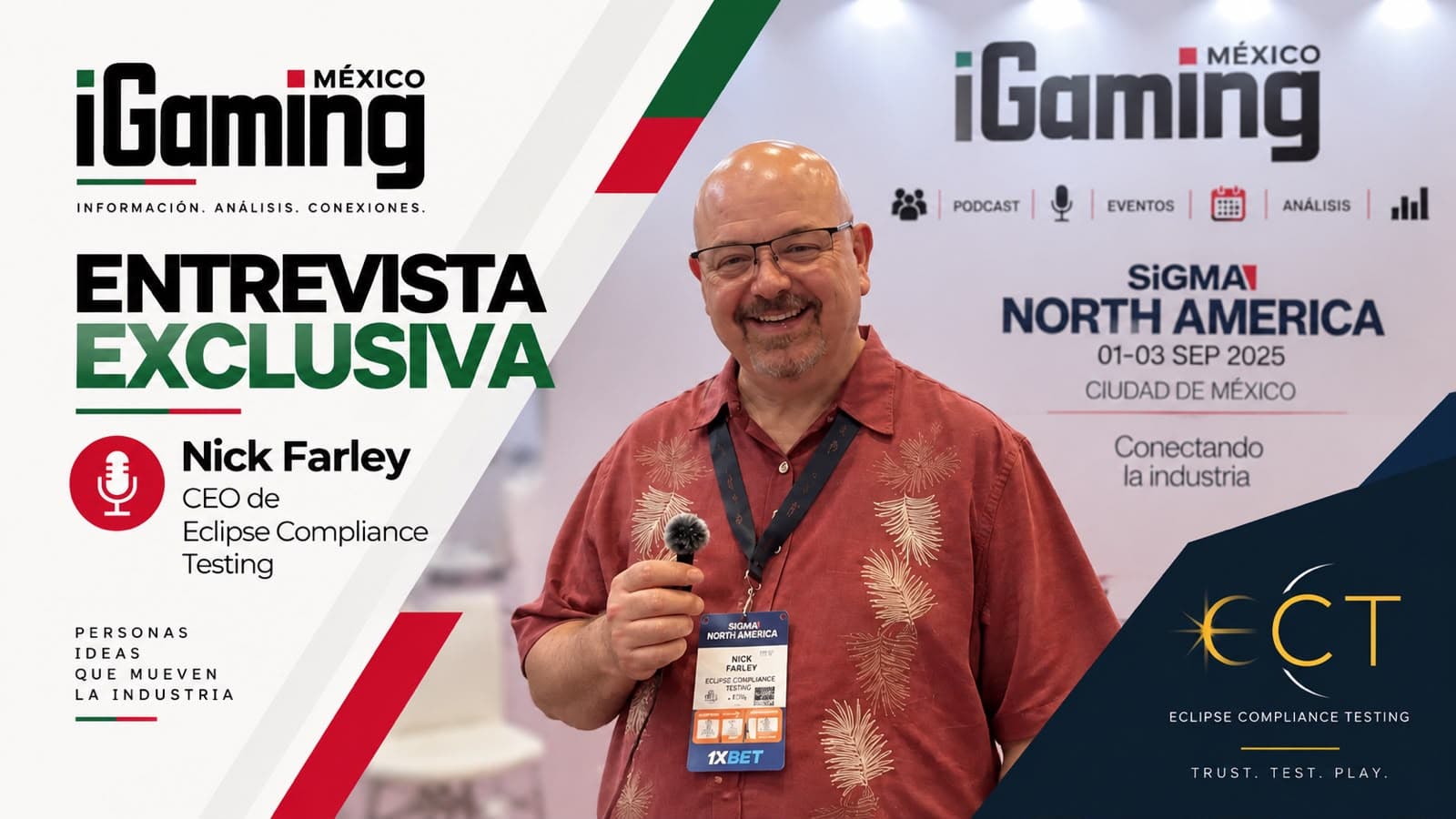
Interview with Nick Farley, CEO of Eclipse Compliance Testing
As the gaming industry incorporates new technologies, gameplay models, and digital channels, certification and compliance processes are playing an increasingly crucial role. For operators, suppliers, and regulators, ensuring that a product functions according to established standards is not merely a technical requirement: it is also a way to protect players and build trust in the market.
In a conversation with Nick Farley, CEO of Eclipse Compliance Testing, we discussed the value of independent testing, the common mistakes companies make when entering regulated markets, and the impact that technologies like artificial intelligence and online gaming are having on the industry.
With over three decades of experience in the field, Farley also anticipates a potential shift in the behavior of new generations: a transition toward increasingly interactive experiences where skill-based games could take center stage over traditional models based exclusively on chance.
Why is independent compliance testing so vital for protecting both operators and players?
Independent testing helps ensure the integrity of all games offered in the market. An independent laboratory verifies that products comply with the appropriate standards and that players are treated fairly when participating in a game. Ultimately, that process raises the level of trust in the products offered across the gaming industry. When independent evaluation is present, both operators and players can have greater certainty that the product has been audited and functions within established parameters.
What are the most common compliance mistakes companies make when entering a new regulated market?
One of the main issues occurs when companies arrive in a new market without being fully prepared to work with an independent laboratory. There is often some reluctance to hand over confidential information, especially the source code. However, it is essential for the lab to review that code and understand how the product actually works “under the hood,” as we often say in the lab business. That review confirms everything functions properly and meets applicable standards. For many new companies, this can feel uncomfortable because source code represents, in a way, their “secret recipe.” Naturally, they want to protect it, but they must understand that providing that level of information is part of the independent evaluation process.
How are technologies like artificial intelligence and online gaming changing the way products are tested and certified?
New technologies, especially artificial intelligence, are creating very intriguing prospects for the industry. We are already seeing clients use AI to assist in developing new games, and on our side, we are exploring how this technology could help make testing processes more efficient. I can’t share too many details about how we’re approaching it just yet, but it is definitely an area we are watching closely. As for online gaming, I believe it is here to stay and will not disappear anytime soon. Personally, I think the new generation of players prefers online experiences over exclusively visiting physical venues. Brick-and-mortar establishments still have their place in the industry, but online channels will continue to grow and should be part of any physical operation seeking to adapt to evolving player preferences.

Finally, after more than three decades in this field, what major regulatory shift do you think the gaming industry should prepare for?
I believe the gaming regulatory industry must prepare for a paradigm shift: moving from an environment dominated primarily by games of chance to seeing an increasing presence of skill-based games. I feel the next generation of players desires more interactive experiences and enjoys using skills like hand-eye coordination to influence outcomes. If the industry can find appropriate models to monetize those types of experiences, I believe it could represent a very compelling path toward building a solid future for the sector.
Nick Farley’s vision connects three transformations happening simultaneously within the gaming industry: heightened regulatory demands, technological acceleration, and shifting player preferences.
In this environment, independent testing serves as a bridge between innovation and trust. The adoption of artificial intelligence and new digital formats may alter both the products and the processes used to evaluate them, but the objective remains unchanged: verifying that they function correctly and that players participate under fair conditions.
Farley also points to a generational shift that could force regulators, testing labs, and developers to reexamine traditional concepts. If younger players seek digital, interactive experiences involving their own skills, the industry must be prepared to certify and regulate products that may move away from classic categories.
For Eclipse Compliance Testing, the future is not about slowing down innovation but rather building the mechanisms needed to support it with integrity, standards, and trust.