


World Cup 2026: The Major Regulatory and Commercial Challenge of iGaming in Mexico
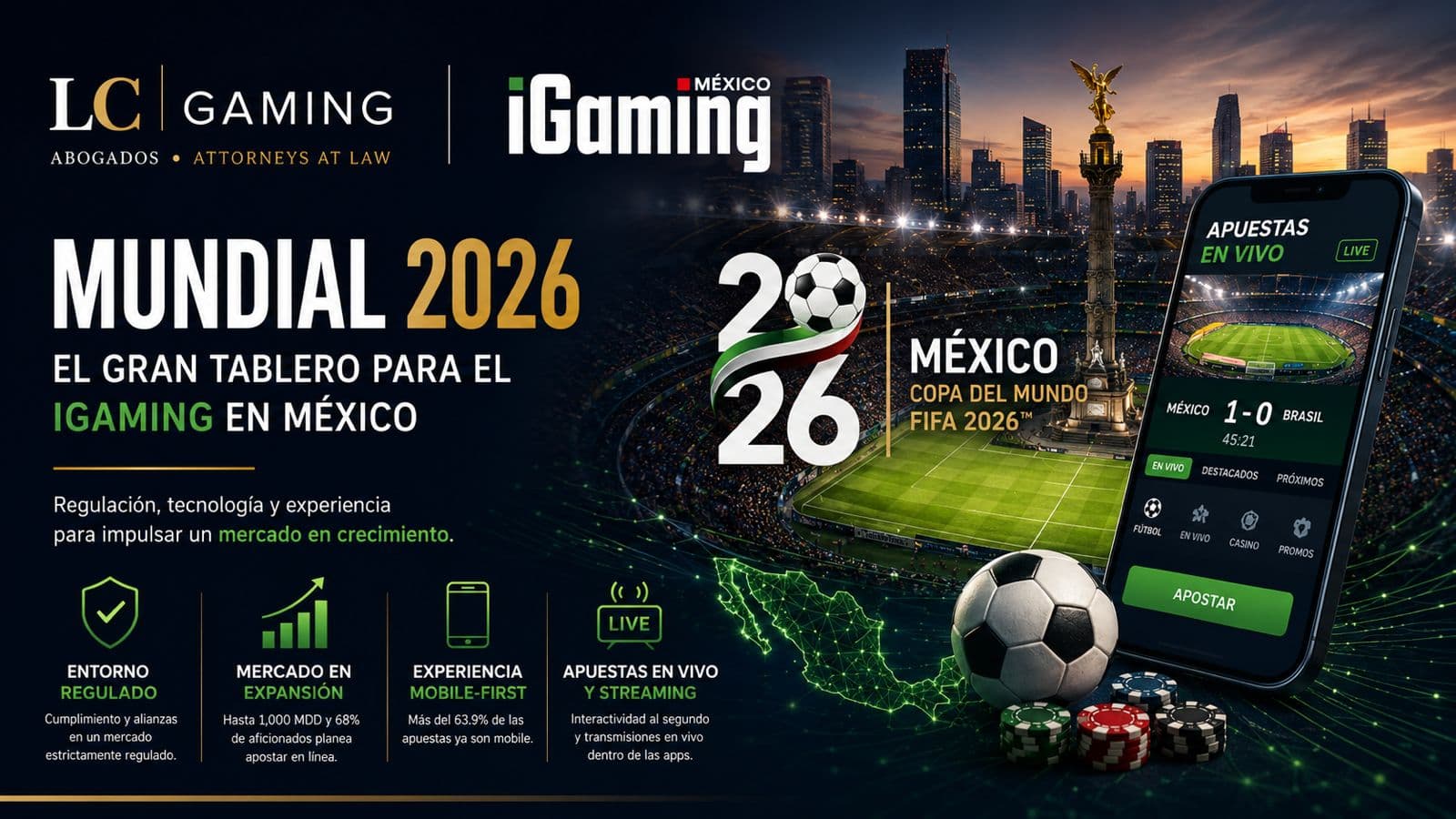
For operators, regulators, and sports betting platforms, the World Cup represents much more than just a peak season. The event is driving a structural transformation within the Mexican online gaming industry, marked by new regulatory challenges, fiscal pressure, and accelerated technological evolution.
An Expanding Market… But Increasingly Regulated
The sector’s growth in Mexico remains robust. According to industry estimates, the iGaming market is already approaching 0.5% of the national GDP and could reach a value close to 1 billion dollars during this World Cup cycle.
The profile of the Mexican bettor has also evolved significantly. The increase in digital users, combined with the expanded World Cup format—which now features 48 teams and 104 matches—has created an ideal scenario for the growth of online sports betting.
However, this boom is occurring amid a much stricter regulatory environment than in previous tournaments. Recent amendments to the Regulations of the Federal Law on Games and Raffles, enforced by the General Directorate of Games and Raffles (DGJS) of SEGOB, have changed the rules of the game.
Restrictions on issuing new independent permits and limitations on certain gaming modalities have forced international operators to rethink their strategy in Mexico. Currently, alliances with local permit holders and joint venture models have become a necessity to compete legally within the country.
Fiscal Impact Redefines Profitability
One of the main issues currently worrying the industry is tax pressure.
Proposals to increase the Special Tax on Production and Services (IEPS) rate applied to online games and raffles by up to 50% could radically alter the operating margins of authorized platforms.
Faced with this scenario, companies face a complex balancing act: maintaining competitive odds and attractive promotions without compromising profitability. The risk is clear: an excessive tax burden could incentivize users to migrate to international platforms without local licenses.
The discussion around taxation has become one of the central points for the immediate future of the Mexican market.
The Dominance of Mobile Betting and Live Betting
The digital transformation is also redefining the user experience.
Currently, more than 63% of bets in Mexico are placed via mobile devices, consolidating the “mobile-first” model as the industry’s dominant standard.
Additionally, live betting continues to gain ground due to the demand for immediate and interactive experiences. Features such as real-time cash out, dynamic statistics, and integrated broadcasts have become essential elements for user retention.

One of the most relevant changes during this World Cup is the integration of sports broadcasts directly within authorized betting platforms. This turns the apps into true digital entertainment hubs, where users can watch the match, place bets, and monitor results in real time from a single environment.
The technological pressure stemming from massive traffic spikes has also forced companies to strengthen their digital infrastructure. They are utilizing artificial intelligence, automation, and high-capacity servers to prevent crashes during key matches, especially those involving the Mexican National Team.
Cybersecurity and Compliance: Absolute Priorities
The accelerated growth of online betting has also drawn increased scrutiny from agencies like the SAT (Tax Administration Service) and the Financial Intelligence Unit (UIF).
As a result, platforms must reinforce three fundamental areas:
KYC and Anti-Money Laundering (AML)
Fast and secure identity validation has become an essential requirement to guarantee transparent operations and comply with regulatory standards.
Data Protection and Cybersecurity
With millions of digital transactions taking place during the World Cup, companies must shield their systems against potential cyberattacks and fraud.
Responsible Gaming
The sustainability of the sector will also depend on implementing effective control tools, such as deposit limits, behavioral monitoring, and digital self-exclusion systems.
The Legacy of the 2026 World Cup for Mexican iGaming
The 2026 FIFA World Cup will mark a turning point for the online gaming industry in Mexico.
Beyond the immediate economic impact, the tournament is accelerating the professionalization of the market, strengthening regulatory processes, and raising the technological and operational standards of the entire industry.
The companies that manage to adapt to the new fiscal environment, comply with regulatory demands, and offer secure, fast, and innovative digital experiences will be the ones leading the future of iGaming in the country.
The World Cup will end in July, but the new landscape of online gaming in Mexico is just beginning.