Gerardo Ballesteros: Legality and Growth in the Mexican Gaming Market
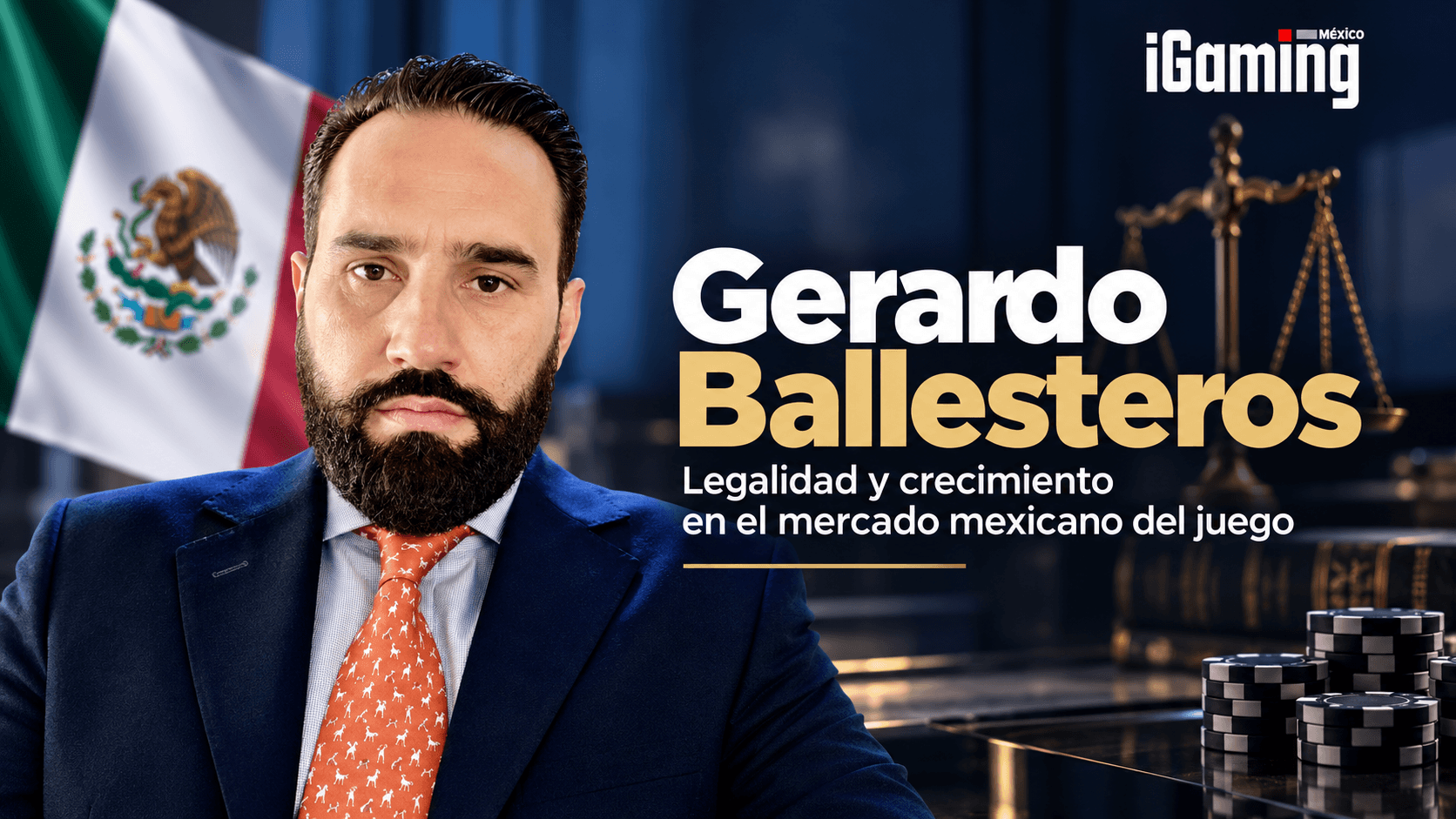
The representative of LC Gaming analyzes opportunities in the Mexican market, regulatory and tax challenges, technological innovation, and key factors for building a stronger gaming industry in Latin America.
The Mexican gaming market is undergoing a period of transformation marked by technological evolution, compliance demands, and the ongoing debate over updating its regulatory framework. In this landscape, legal certainty and business model structuring have become crucial factors for companies seeking to enter or consolidate their presence in the country.
At LC Gaming, a firm specializing in gaming and lottery law, Gerardo Ballesteros shares his perspective on sector opportunities, Mexican player behavior, and the challenges facing operators, suppliers, and investors in an increasingly demanding environment.
In this interview for iGaming Mexico, he addresses the role of payment innovation and fraud prevention, the impact of the tax environment, the importance of responsible gaming, and the trends that could shape market evolution heading into 2027.
1. How would you define LC Gaming’s role and value proposition for Latin America?
LC Gaming is a strategic regulatory partner. We specialize in gaming and lottery law, guiding permit holders (permisionarios), operators, suppliers, and investors who want to enter or expand in the market with total legal certainty. In Mexico, success depends not just on capital but on operating with legality, transparency, and corporate ethics.
Our value proposition combines three elements: First, a deep understanding of the Federal Law on Games and Lotteries, its Regulations, and the enforcement criteria of Segob’s General Directorate of Games and Lotteries (DGJS). Second, structuring viable business models that include permits, supplier/operator/affiliate contracts, tax compliance, and anti-money laundering (AML) protocols. Third, a regional vision—helping new entrants understand that they cannot simply copy-paste models from Brazil, Colombia, or Argentina into Mexico.
2. What are the main opportunities in the Mexican market?
The underlying fundamentals are very strong. Mexico boasts a young, mobile-first population, a deeply rooted sports culture with soccer as its main engine, and a formal supply that remains underpenetrated relative to demand. Market estimates vary based on methodology: the regulated online gaming segment is estimated at nearly $1 billion, while estimates that include the grey market exceed $3 billion.
That gap represents the opportunity. Demand is currently being served largely outside the formal framework, and whoever delivers a legal, reliable operation with a great user experience can capture it. I see concrete opportunities on four fronts:
- Sports betting and online casinos under solid permit holders.
- B2B partnerships between permit holders and content, platform, and payment providers.
- Raffles and well-structured digital entertainment models.
- Compliance, auditing, and responsible gaming services, which the market still needs to develop further.
3. What innovations are making a difference, and which will have the biggest impact?
From my perspective, the innovation that matters is the one that can also be implemented in full compliance with regulations. Today I see five key lines:
- Payments: Payment orchestration incorporating SPEI, cards, convenience store cash deposits, and digital wallets. In Mexico, easy deposits and withdrawals are decisive trust factors.
- Automated KYC and Anti-Fraud: Identity verification and biometrics that streamline AML compliance, prevent underage access, and detect bonus abuse.
- AI Personalization: Enhances user experience and detects problem gambling patterns, provided it is used transparently with proper data privacy protections.
- Live Casino and Localized Content: High-engagement formats tailored to Mexican player tastes.
- Responsible Gaming Tools: Deposit limits, self-exclusion, and automated alerts, which will cease to be optional.
What will have the greatest impact over the coming years is the combination of frictionless payments, automated compliance, and data intelligence paired with player protection.
4. What changes have you observed in the Mexican player, and how should operators respond?
The Mexican bettor is increasingly digital, informed, and demanding. They play on mobile devices, prefer frequent small deposits, and demand fast withdrawals and customer support via channels like WhatsApp. They value brands perceived as trustworthy with a local presence. Soccer—especially Liga MX and major international tournaments—remains the primary entry gateway before users explore other verticals like slots, roulette, and live casino.
There is also a player segment wary of platforms that fail to pay out or lack clear backing. Operators should:
- Clearly display who the permit holder is and under which permit they operate.
- Provide fast withdrawals and transparent bonus terms.
- Offer support in local Spanish with real human assistance.
- Integrate responsible gaming into the product core, not as a legal footnote.
- Maintain responsible advertising, observing strict rules regarding minors and avoiding guaranteed win claims.
5. How does the regulatory environment impact the sector, and what would create a stronger market?
We are applying a 1947 law and 2004 regulations to a digital industry that did not exist when they were drafted. The model functions through federal permits granted by Segob’s DGJS, lacking a specific, standalone online gaming license. This generates interpretive ambiguity, complicates new market entry, and leaves room for unlicensed offerings.
Added to this is the tax shift. Starting in 2026, the IEPS (Excise Tax) on games with bets and raffles rose from 30% to 50% and was extended to digital offerings, including foreign operators targeting Mexican users. This is a clear signal that the government wants to collect revenue and formalize the market. However, such a high tax burden risks pricing legal offerings out of competition compared to illegal platforms, which are estimated to account for roughly 60% of available online gaming.

To build a stronger market, I consider the following essential:
- A new law and set of regulations explicitly recognizing remote gaming, with clear licensing, validity, and compliance terms.
- Fiscal proportionality, as an excessive tax burden can yield the opposite of the intended effect.
- Effective enforcement against illegal operators, including site blocking, payment blocking, and coordination with SAT (tax agency) and UIF (AML unit).
- Technical standards and mandatory platform/game certifications.
- A robust responsible gaming and consumer protection framework.
- Specialized regulatory dialogue and predictable administrative criteria.
6. What ongoing challenges do companies face when growing in Latin America, and Mexico in particular?
There are regulatory, fiscal, operational, and reputational challenges. In Mexico, key hurdles include:
- Permit Access: Difficulty obtaining new federal permits forces many companies to enter via operator partnerships. These structures must be designed carefully, as primary legal responsibility before authorities rests on the permit holder.
- Tax Pressure: With IEPS at 50%, profit margins tighten, making operational efficiency critical.
- Unfair Competition: Unlicensed platforms operating without tax burdens.
- AML Compliance: Gaming is classified as a “vulnerable activity” under Anti-Money Laundering Law, entailing strict identification, reporting to the UIF, and record-keeping duties.
- Banking Access: Certain financial institutions remain cautious toward the sector.
- Regional Fragmentation: Every Latin American country uses a distinct model; a single strategy cannot be copy-pasted across borders.
7. Which factors enable differentiation and long-term relationships?
In a competitive market, long-term partnerships are sustained by trust. I would highlight four key factors:
- Verifiable Compliance: Operating under valid permits, clear corporate structures, solid contracts, and up-to-date tax/AML filings. An operator with compliance issues puts its permit and brand at risk.
- Player Experience: Fast payouts, localized content, and quality support.
- Transparency: Clear terms, understandable bonuses, and responsible advertising.
- Well-Structured Partnerships: Clear division of responsibilities, information sharing, and oversight between permit holders, operators, and suppliers.
Between operators and suppliers, reputation takes years to build but can be destroyed by a single compliance incident.
8. What projects or focus areas are you currently driving, and what can we expect?
We are focused on supporting our clients through this regulatory transition. This includes structuring online gaming projects under permit-holder arrangements, auditing vendor contracts, building AML compliance programs, adapting tax strategies to the new IEPS rate, and reviewing advertising and data privacy policies. We are also actively monitoring and participating in dialogue regarding the new Federal Law on Games and Lotteries so our clients are fully prepared when it materializes. In the coming months, we aim to strengthen our support for companies entering Mexico and expand our regional advisory services across Latin America.
9. Looking toward 2027, how do you see the Mexican market evolving?
I believe 2027 will be a defining year. I see four major trends:
- New Legal Framework: The government has recognized the need to update the law, and industry roundtable discussions have taken place. If enacted, the challenge will be ensuring the new law is technically sound and balanced.
- Formalization and Consolidation: Under higher tax pressure and tighter enforcement against illegal operators, I expect fewer—but stronger and better-capitalized—operators, alongside increased M&A activity.
- Responsible Gaming as an Industry Standard: Moving from a regulatory requirement to an operational default.
- Compliance Technology: Real-time transaction monitoring, automated ID verification, and algorithmic auditing.Compliance Technology: Real-time transaction monitoring, automated ID verification, and algorithmic auditing.
Following the boost from major sporting events like the 2026 World Cup, the market will have to demonstrate its ability to retain players without relying on a single catalyst.
10. To close, what message would you like to share?
Mexico is a market with enormous potential, but it demands rigor. My message to operators, suppliers, and industry stakeholders is to invest first in legality and corporate structure, and then in growth. Those who comply, document their operations, and build transparent relationships with authorities, partners, and players are the ones who endure when a market fully regulates. I invite the industry to engage in active dialogue with regulators to build an orderly, competitive market that protects players. In this sector, legality and reputation are worth far more than fast, short-term growth.
iGaming México thanks Gerardo Ballesteros and LC Gaming for sharing their perspective on the industry’s challenges and opportunities. In a market undergoing transformation, dialogue among sector stakeholders will be fundamental to driving a more transparent, competitive industry prepared for the challenges of the coming years.