Regulatory Earthquake in Brazil: Definitive Ban or Strategic Shift in Latin America?
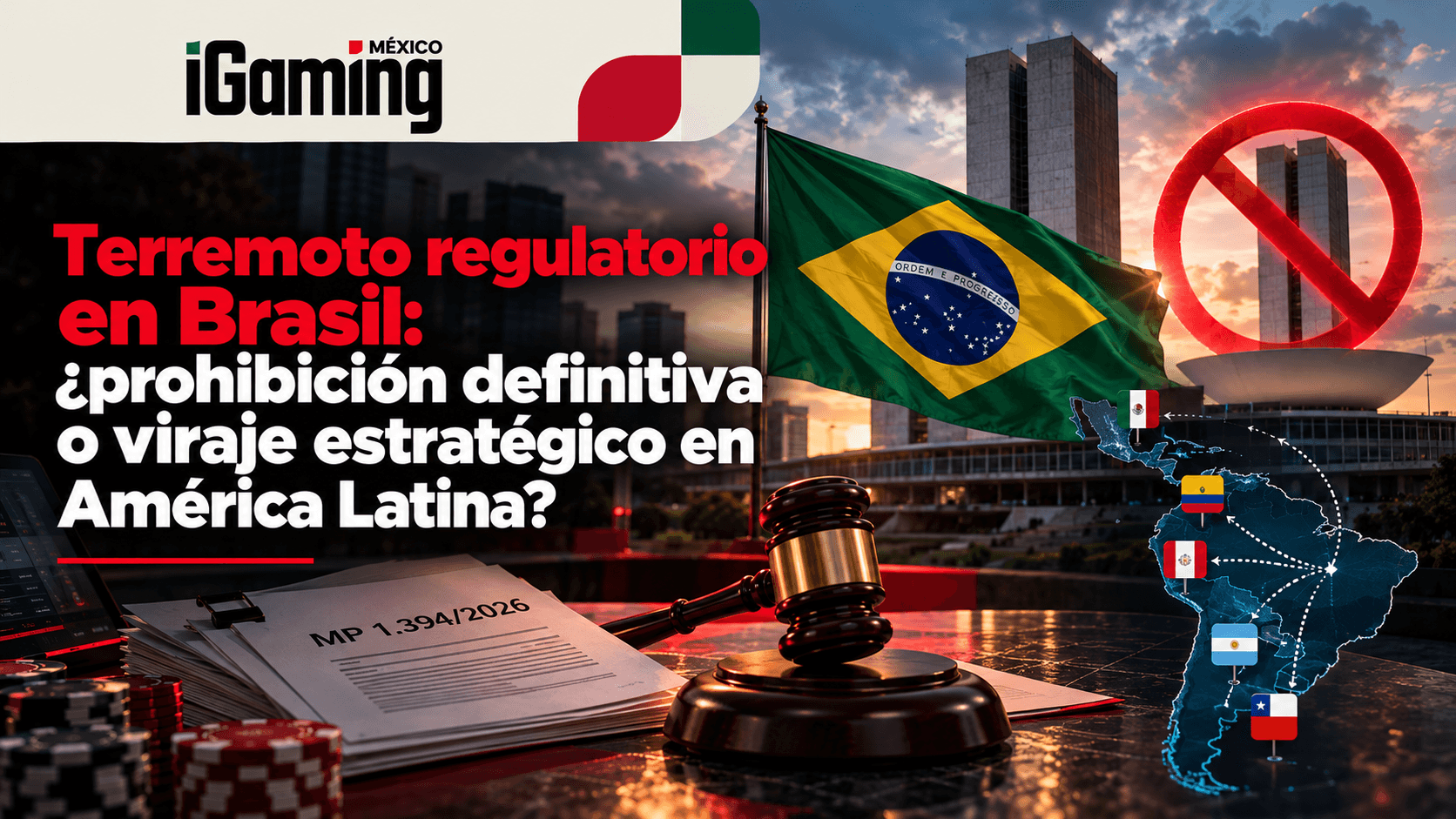
The iGaming and sports betting market in Latin America is undergoing a structural shift following the promulgation of Provisional Measure MP 1.394/2026 by the Brazilian executive branch. The decree orders the suspension of fixed-odds betting (bets) and virtual online gaming at both federal and state levels, causing an abrupt shutdown in one of South America’s most critical markets.
Just months after launching a formal licensing and taxation framework, the measure imposed an immediate cessation of transactions, platform shutdowns, and domain blocking by the National Telecommunications Agency (Anatel). Against this backdrop, the global industry is monitoring a situation that raises two fundamental questions: whether this suspension marks the definitive end of gaming in Brazil or represents an ongoing legal battle, and how this capital redistribution might impact the rest of Latin America.
A Suspension Subject to Legal Review
The suspension of gaming in Brazil is not, according to current assessments, an absolute and irrevocable decision. The measure is making its way through constitutional and legislative channels that could determine its continuation or eventual reversal.
A primary turning point lies within the National Congress. Under the Brazilian constitutional framework, a Provisional Measure carries immediate force of law but remains temporary. Congress has a 60-day deadline—extendable for an additional 60 days—to review, amend, approve, or reject the text.
If the measure fails to secure necessary approval or is rejected on grounds of undermining free enterprise, legal certainty, or tax collection, it would retroactively lose efficacy, allowing the regulated market to reactivate under previous legislation.
Concurrently, the Federal Supreme Court (Supremo Tribunal Federal – STF) serves as another decisive forum. Industry associations, such as the Brazilian Institute for Responsible Gaming (IBJR), alongside business confederations, have filed Direct Actions of Unconstitutionality (Ações Diretas de Inconstitucionalidad – ADI) with the Court.
These lawsuits request an immediate preliminary injunction suspending the measure due to alleged violations of constitutional principles, including legal certainty, acquired rights of companies that paid licensing fees, and free competition. A ruling by the STF declaring the suspension unconstitutional would compel the federal government to reinstate operations.
Consequently, the institutional outcome will depend on both parliamentary review and judicial rulings. The suspension remains subject to these processes, meaning its permanent status is far from established within the current scenario.
Capital Redistribution Opens Regional Opportunities
The interruption of a market projected at billions of dollars does not eliminate betting demand nor the investment appetite of major multinational operators. Instead, it is likely to trigger a redistribution of marketing budgets, expansion capital, and user engagement toward other countries in the region.
In this environment, Colombia, Peru, Argentina, and Mexico emerge as markets with varying levels of regulatory maturity and potential to absorb activity shifting away from Brazil.

Colombia stands out for its high degree of regulatory maturity under Coljuegos supervision. Normative clarity and stability for licensees position it as a primary potential beneficiary. Multinational operators are already reallocating acquisition budgets toward their ecosystem due to legal predictability.
Peru, featuring a medium-to-high maturity level and regulatory oversight by the Ministry of Foreign Trade and Tourism (MINCETUR), also presents favorable prospects. Its consolidated licensing process, competitive tax rates, and strong global brand interest make it an attractive alternative for companies with regional infrastructure seeking immediate deployment.
Argentina presents a positive, albeit moderate, potential impact. Its market size and sports sponsorship appeal offer opportunities despite regulatory fragmentation across jurisdictions, including the Autonomous City of Buenos Aires (CABA).
Mexico, for its part, boasts a massive user base, dynamic sports betting activity, and renewed interest in modernizing its regulatory frameworks. These characteristics place it among the top markets poised to benefit from regional investment redistribution.
Sports Sponsorships and Regulatory Modernization
One of the key ripple effects of the operational halt in Brazil centers on the sports sponsorship market. The suspension of massive advertising deals across Brazilian soccer could unlock opportunities for clubs in the Argentine Professional League and Liga MX to secure lucrative agreements with international brands.
This potential shift in sponsorship dollars forms part of a broader overhaul of operator commercial strategies, as firms seek alternative avenues to maintain regional brand awareness and deploy marketing budgets.
At the same time, the Brazilian situation could influence regulatory debates in neighboring countries. Chile and Uruguay, both engaged in legislative discussions, have an opportunity to expedite debates to capture capital left in limbo.
The evolution of these legislative processes will prove critical in determining which markets offer regulatory environments capable of attracting capital and delivering stability to industry participants.
Latin America Enters a New Era for iGaming
The situation in Brazil represents a strategic pause for the Latin American market. The activation of legal mechanisms before the Federal Supreme Court and parliamentary debates within the Brazilian Congress will dictate the country’s short-term trajectory.
While the situation resolves, the region is poised for a strategic realignment of investments, acquisition budgets, and commercial partnerships. Markets backed by solid, transparent regulatory frameworks will be best positioned to capture this diverted momentum.
The immediate future of Latin American iGaming will heavily depend on Brazil’s institutional resolution and the capacity of neighboring nations to provide regulatory conditions that foster investment and sustain sector growth.